

Table of Contents
- How to Tell If Your Dog Has Skin Allergies
- What You'll Need Before You Start
- Natural Remedies to Soothe Dog Itchy Skin at Home
- Oatmeal Bath for Dogs Recipe: Step-by-Step
- Omega-3 Supplementation and Dog Itchy Skin Relief from the Inside Out
- Common Mistakes to Avoid When Treating Itchy Skin at Home
- When to See a Vet for Dog Itching
- Conclusion
How to Tell If Your Dog Has Skin Allergies
Dog itchy skin is one of the most common veterinary complaints, and often misunderstood. According to the American Kennel Club's guide to dog skin conditions, allergic skin disease is among the top reasons dogs visit the vet each year.
Atopic dermatitis is a chronic, inflammatory skin condition triggered by environmental allergens. It produces a predictable cycle: scratching damages the skin barrier, creating openings for secondary bacterial infection or yeast dermatitis, which worsens itching. Recognizing this cycle early is the difference between effective treatment and prolonged suffering.
The most reliable signs of allergic skin disease include:
- Constant licking of paws, groin, or armpits
- Red, inflamed skin or hot spots
- Recurring ear infections
- Flaky, greasy, or malodorous coat
- Rubbing the face against furniture or carpet
- Hair loss or thickened skin in chronic cases
Signs That Point to Environmental vs. Food Triggers
Environmental allergens like pollen, dust mites, and mold typically produce seasonal flare-ups, though indoor allergens can cause year-round symptoms. Food triggers usually produce consistent, non-seasonal itching alongside digestive symptoms like loose stools or excessive gas.
A common mistake is assuming seasonal itching always means pollen. Dust mite allergies peak indoors during winter when houses are sealed, so a dog scratching in January might be reacting to bedding, not trees. Tracking the timing and location of your dog's itching in a journal gives your vet far more useful data than a general description.
Breeds Most Prone to Atopic Dermatitis
Breed-specific skin sensitivities are clinically documented. According to Merck Veterinary Manual's overview of atopic dermatitis in dogs, certain breeds carry a genetic predisposition to a compromised skin barrier, making them significantly more reactive to environmental triggers.
Breeds with the highest documented risk include:
- Golden Retrievers and Labrador Retrievers, prone to environmental and food allergies
- West Highland White Terriers, notorious for chronic skin and ear issues
- Bulldogs and Boxers, skin folds trap moisture and create conditions for yeast dermatitis
- German Shepherds, susceptible to both atopic dermatitis and secondary bacterial infection
- Shar-Peis, deep skin folds and naturally compromised skin barrier
- Cocker Spaniels, frequent ear infections alongside generalized pruritus
If your dog belongs to one of these breeds, a more aggressive prevention strategy makes sense from the start.
What You'll Need Before You Start
Before applying any natural remedy, gather supplies and read the safety notes in this guide. The wrong concentration or product can worsen inflammation or cause a histamine response.
Basic supplies for home treatment:
- Colloidal oatmeal (not flavored instant oatmeal)
- Raw, unfiltered apple cider vinegar
- Pure, unrefined coconut oil
- Chamomile tea bags or green tea bags
- Epsom salt (plain, no added scents or colors)
- Baking soda
- A spray bottle and measuring cups
- Clean towels and a non-slip bath mat
One rule applies across every remedy: if your dog has open wounds, raw hot spots, or broken skin, do not apply any topical treatment without veterinary guidance.
Natural Remedies to Soothe Dog Itchy Skin at Home
The remedies below address dog itchy skin through different mechanisms: some reduce inflammation directly, others restore skin hydration, and others rebalance pH to discourage yeast and bacteria. Introduce one at a time so you can identify what works for your specific dog.
Colloidal Oatmeal Baths
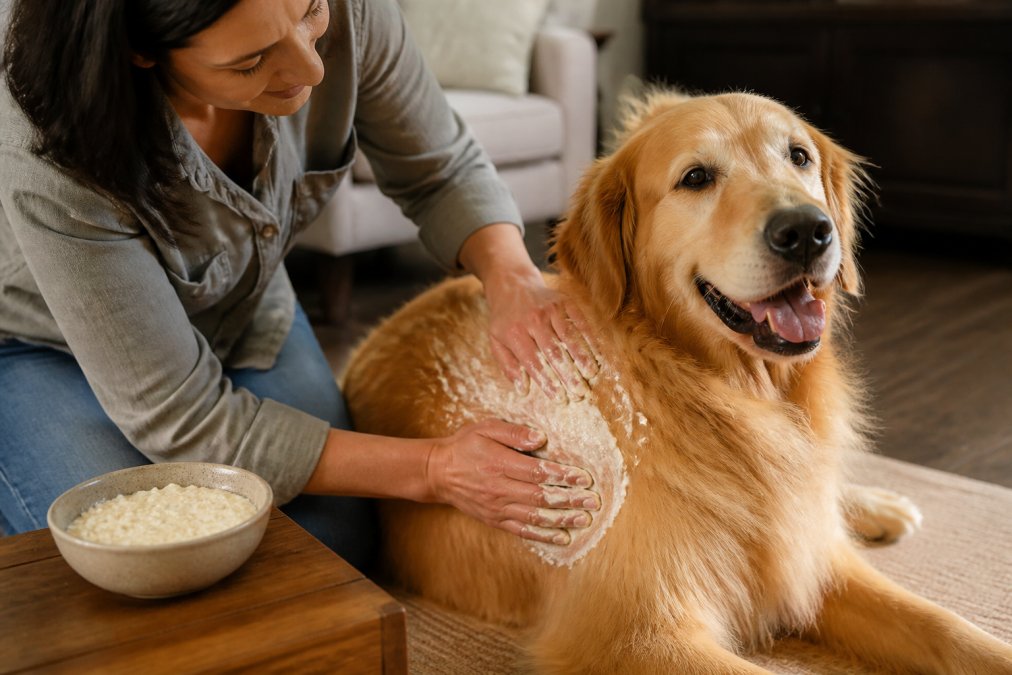
Colloidal oatmeal is the most evidence-backed topical remedy for canine pruritus. The fine oat particles coat the skin, reduce transepidermal water loss, calm inflammation, and soothe irritated nerve endings.
Use only colloidal oatmeal, ground to a fine powder. Add one cup per standard bathtub of lukewarm water, let your dog soak for 10 to 15 minutes, and do not rinse. Towel dry gently. Frequency: two to three times per week during active flare-ups, once weekly for maintenance.
Coconut Oil for Skin Barrier Support
Coconut oil works as both a topical moisturizer and a mild antimicrobial agent. Applied to the skin, it helps restore the lipid layer of the skin barrier, which is often depleted in dogs with atopic dermatitis. Warm a small amount between your palms and massage it gently into affected areas, avoiding the eyes and ears.
Coconut oil is high in saturated fat, and some dogs will lick it off aggressively, leading to caloric excess or digestive upset. Use sparingly and distract your dog for at least 20 minutes after application.
Apple Cider Vinegar Spray
Apple cider vinegar's mild acidity restores the natural pH balance of dog skin, creating an inhospitable environment for yeast dermatitis and some bacterial strains. Mix one part raw apple cider vinegar with one part water in a spray bottle. Apply to non-broken skin, focusing on paws, belly, and skin folds.
Never spray apple cider vinegar on open wounds, raw hot spots, or inflamed skin. The acidity will cause significant pain and worsen tissue damage.
Baking Soda Paste for Hot Spots
Baking soda has mild anti-inflammatory and pH-neutralizing properties that reduce surface irritation on hot spots. Mix baking soda with just enough water to form a thick paste, apply it directly to the affected area, and leave it on for 20 minutes before rinsing thoroughly.
Use baking soda only for spot treatment on small areas. Overuse can disrupt the skin's natural pH balance.
Chamomile and Green Tea Rinses
Chamomile and green tea contain anti-inflammatory compounds that provide topical relief for generalized skin irritation. Brew two to three tea bags in a litre of water, let it cool completely, and pour or spray it over your dog's coat as a final rinse after bathing. Do not rinse off.
These rinses are among the gentlest options available and are appropriate even for dogs with sensitive or reactive skin.
Epsom Salt Paw Soaks
Paw itching is one of the most common signs of environmental allergens, because paws make direct contact with grass, pollen, and surface irritants during walks. Epsom salt soaks reduce inflammation and draw out surface irritants from between the toes.
Dissolve one tablespoon of plain Epsom salt in a litre of warm water. Soak each paw for three to five minutes. Dry thoroughly afterward, paying close attention to the spaces between the toes, where moisture retention can encourage yeast growth.
Oatmeal Bath for Dogs Recipe: Step-by-Step
The oatmeal bath recipe below is designed for a medium to large dog. Adjust quantities proportionally for smaller breeds.
What you need:
- 1 to 2 cups of plain colloidal oatmeal (or blend plain rolled oats to a fine powder in a blender)
- A bathtub or large basin
- Lukewarm water (never hot, heat worsens inflammation)
- Clean towels
Steps:
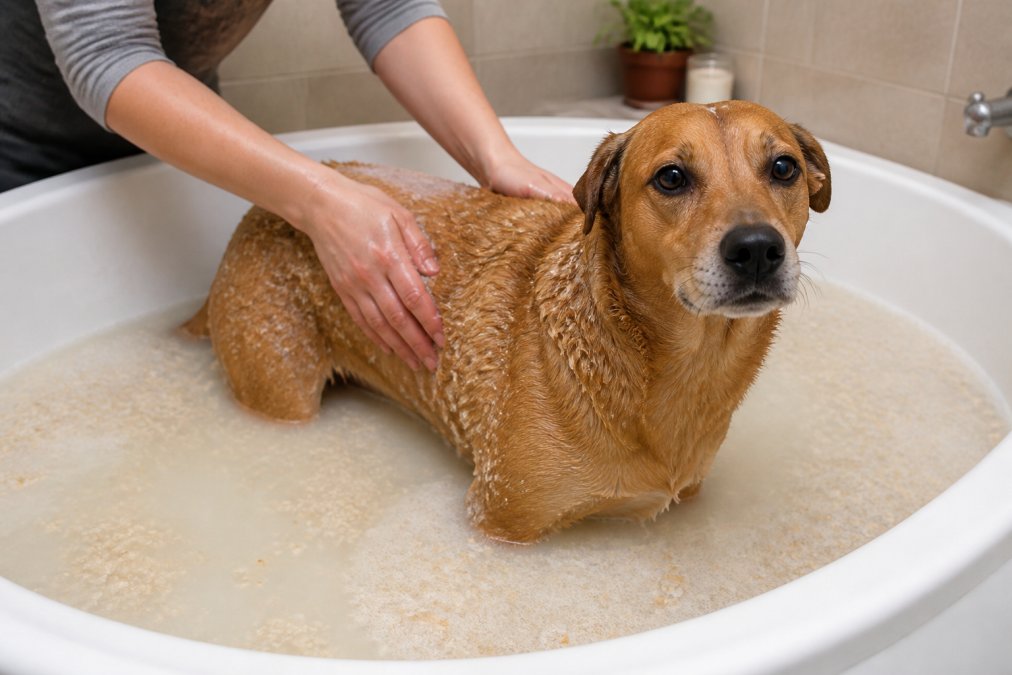
- Fill the tub with lukewarm water to a depth that reaches your dog's belly.
- Add the colloidal oatmeal and stir until the water turns milky and slightly thick.
- Lower your dog into the tub and use a cup to pour the oatmeal water over their back, shoulders, and neck.
- Gently massage the oatmeal water into the coat and skin for 5 to 10 minutes, focusing on the itchiest areas.
- Allow your dog to soak for a total of 10 to 15 minutes.
- Lift your dog out and towel dry gently; do not rub, as rubbing can re-irritate sensitive skin.
- Do not rinse. The oatmeal residue continues to soothe and moisturize as it dries.
Frequency guide:
|
Severity |
Oatmeal Bath Frequency |
Duration Per Session |
|---|---|---|
|
Mild irritation |
Once per week |
10 minutes |
|
Moderate flare-up |
2-3 times per week |
10-15 minutes |
|
Severe / active hot spots |
Consult a vet first |
Not recommended alone |
|
Maintenance (no active flare) |
Every 2 weeks |
10 minutes |
Omega-3 Supplementation and Dog Itchy Skin Relief from the Inside Out
Omega-3 fatty acids are an important part of a dog’s diet and help support healthy skin, coat, and normal immune function. Nutritional support can be especially helpful as part of a consistent daily wellness routine.
O3 Canine is made with organic camelina oil, a natural source of omega fatty acids, that undergoes our ozonation process. It’s designed as an easy daily supplement that can simply be added to your dog’s food.
O3 Canine supports healthy skin and coat, digestive wellness, and overall immune function. For dogs that frequently lick or scratch, supporting skin and gut health from within can be an important part of their overall wellness routine.
Every dog is different, so results and timing can vary. Consistent daily use alongside a balanced diet and appropriate veterinary care provides the best foundation for long-term skin and coat health.
Safety Warnings: What to Avoid
Essential oils are the most dangerous category of natural remedies for dog itchy skin. Tea tree oil, eucalyptus, peppermint, and many other essential oils marketed as natural and soothing are genuinely toxic to dogs, even in dilute concentrations. According to ASPCA Animal Poison Control Center's toxicity guide, tea tree oil is one of the more common causes of essential oil poisoning in dogs.
Other products to avoid:
- Undiluted apple cider vinegar on any skin surface; always dilute 1:1 with water
- Human moisturizers and lotions, many contain xylitol, fragrances, or zinc oxide, which are toxic to dogs
- Hydrogen peroxide on skin; damages tissue and delays healing
- Medicated human shampoos, pH is calibrated for human skin, not canine skin
- Any product with artificial fragrances, common histamine triggers in sensitive dogs
Common Mistakes to Avoid When Treating Itchy Skin at Home
The biggest mistake is treating dog itchy skin as a single problem with a single solution. Most dogs with chronic pruritus have multiple contributing factors: an environmental trigger, a weakened skin barrier, and a secondary infection, all operating simultaneously.
Using too many remedies at once. Introducing oatmeal baths, coconut oil, apple cider vinegar spray, and a new supplement in the same week makes it impossible to know what helped. Start with one remedy, give it a week, then add the next.
Bathing too frequently with regular shampoo. Over-bathing strips natural oils from the coat and worsens skin hydration. When bathing is necessary, use soap-free, hypoallergenic formulas and follow with an oatmeal or herbal rinse.
Ignoring the itch cycle. Scratching causes skin damage, which causes infection, which causes more itching. If your dog is scratching to the point of breaking skin, a cone or protective sleeve is necessary.
Expecting overnight results from supplements. Fatty acid supplementation takes weeks to produce measurable change. Stopping too early is the most common reason owners conclude that supplements "don't work."
When to See a Vet for Dog Itching
Home remedies are appropriate for mild, uncomplicated itching. They are not a substitute for veterinary care when the situation has escalated beyond surface irritation.
See a vet when:
- Itching has been present for more than two weeks without improvement
- There are open sores, weeping wounds, or significant hair loss
- Your dog is scratching to the point of self-injury
- You notice a foul odor from the skin or ears (sign of secondary bacterial infection or yeast dermatitis)
- The dog is losing weight, lethargic, or showing other systemic symptoms
- Symptoms appear suddenly and severely in a previously healthy dog
A vet can identify whether the underlying cause is atopic dermatitis, a food allergy, a contact allergen, or a parasitic condition like mange, each of which requires a different approach. Natural remedies can complement medical treatment but are most effective when used alongside a correct diagnosis.
The American Veterinary Medical Association's guidelines on dermatological conditions recommend veterinary consultation for any skin condition that does not resolve within two to three weeks of home management.
Managing dog itchy skin naturally takes patience, consistency, and a clear-eyed view of what home remedies can and cannot do. Topical solutions like oatmeal baths and chamomile rinses address surface inflammation effectively. Internal support through omega-3 supplementation addresses the underlying skin barrier and immune response. o3 Canine's all-natural ozonated oil is designed to deliver that internal support simply, added to any meal, with no resistance from even picky eaters. Get started with o3 Canine and give your dog the daily foundation that makes every other remedy work better.
Frequently Asked Questions
What's the best home remedy for a dog's itchy skin?
Colloidal oatmeal baths are widely considered the most effective topical home remedy for dog itchy skin. Colloidal oatmeal contains avenanthramides, compounds with anti-inflammatory properties that calm pruritus and support the skin barrier. For longer-term relief, pairing topical treatments with an omega-3 fatty acid supplement addresses inflammation from the inside out, tackling the itch cycle rather than just masking surface symptoms. Always confirm with your vet if itching persists beyond a week or two.
Is an oatmeal bath safe for dogs with sensitive skin?
Yes. Colloidal oatmeal is hypoallergenic and soap-free, making it one of the safest topical options for dogs with sensitive or atopic skin. Use plain, unflavored oats ground into a fine powder and dissolved in lukewarm water. Avoid adding essential oils, fragrances, or human bath products, as these can disrupt your dog's pH balance and worsen irritation. Rinse thoroughly after 10 minutes and pat the coat dry rather than rubbing.
How can I tell if my dog's itching is caused by food or the environment?
Timing is the clearest clue. Environmental allergens like pollen, dander, and mold tend to cause seasonal itching that worsens at certain times of year, often affecting the paws, belly, and face. Food sensitivities typically produce year-round itching and may accompany digestive issues. A veterinarian can confirm the trigger through elimination diet trials or allergy testing, which is the most reliable way to distinguish between the two and guide your allergy management plan.
When should I see a vet instead of treating dog itching at home?
See a vet if your dog's itching is severe, causes open sores, or shows signs of secondary bacterial infection or yeast dermatitis such as redness, odor, or discharge. Persistent hot spots, hair loss, or skin that appears thickened also warrant professional evaluation. Natural remedies provide topical relief and support skin hydration, but they cannot treat underlying infections or diagnose atopic dermatitis. Combining home care with veterinary consultation gives your dog the best outcome.
