

Table of Contents
- What Is Ozonated Oil and How Does It Work for Dogs?
- Benefits of Ozone Therapy for Dogs
- Ozonated Oil Dosage for Dogs: How Much and How Often
- Side Effects of Ozonated Oil in Pets: What You Should Know
- How to Apply Ozonated Oil to Your Dog
- Choosing the Right Ozonated Oil: What Matters Most
- Contraindications and Drug Interactions
- Conclusion
Last Updated: August 20, 2026
What Is Ozonated Oil and How Does It Work for Dogs?
Ozonated oil for dogs is a topical supplement created by infusing carrier oils with ozone gas, a highly reactive form of oxygen. When ozone contacts unsaturated fatty acids, it generates lipid peroxides and other oxidized compounds that may stimulate the body's natural defense systems, triggering anti-inflammatory and antimicrobicidal responses. Dogs absorb these activated compounds through the skin or digestive tract, where they're theorized to support tissue regeneration and bacterial defense.
What distinguishes ozonated oil from standard oils is the activation process itself. A plain coconut or olive oil provides nutritional fatty acids, while an ozonated version delivers those same fatty acids plus therapeutic byproducts of ozone treatment. Ozone therapy has a long history in veterinary medicine, particularly in European and South American practices. o3 Canine's formulation focuses on making ozonated oil palatable and easy to administer, a practical advantage over injectable ozone therapy or more complex treatment protocols.

Benefits of Ozone Therapy for Dogs
Skin Health and Wound Healing
Ozonated oil's most commonly cited benefit is its potential to accelerate skin healing and reduce irritation. Many dog owners report using ozonated oils for chronic dermatitis, hot spots, and slow-healing wounds. The anti-inflammatory properties may help calm the inflammatory cascade that drives excessive itching and licking behavior.
Ozone therapy is believed to increase oxygen delivery to affected tissues, supporting the natural healing process. For dogs with chronic skin conditions, this translates to reduced redness, faster scab formation, and decreased secondary bacterial infections from constant scratching. Topical application delivers ozone's oxidative compounds directly to the affected area, potentially speeding epithelialization, the process by which new skin forms over a wound. Dogs prone to hot spots often show visible improvement within the first two weeks of regular application, though individual response varies significantly based on the underlying cause.
Immune and Gut Support
When added to food, ozonated oil may support internal immune function and gut health. Ozone exposure triggers the body to produce antioxidant enzymes like superoxide dismutase and catalase, which help manage oxidative stress and support overall immune resilience.
Gut health is increasingly recognized as central to immune function in dogs. Ozonated oil taken orally may help balance the gut microbiome by creating an environment less favorable to pathogenic bacteria while preserving beneficial flora. For dogs dealing with chronic inflammatory diseases or recovering from illness, this gentle metabolic support can contribute to overall vitality. o3 Canine's formulation is designed specifically for oral administration, with a taste profile dogs naturally accept, eliminating the compliance problem many owners face with other supplements.
Ozonated Oil Dosage for Dogs: How Much and How Often
Dosage varies based on the dog's size, product formulation, and condition being addressed. Most manufacturers recommend starting with one-quarter to one-half teaspoon for dogs under 25 pounds, scaling up to one full teaspoon for larger dogs. Daily administration is standard for therapeutic benefit, as consistency builds the compound's effects over time. Most owners see meaningful results within 2-4 weeks of daily use, though some dogs show improvement within days while others require 6-8 weeks.
Add the product directly to food, mixed thoroughly so it's evenly distributed. Mixing with wet food, bone broth, or a small amount of peanut butter works well for picky eaters. Individual variation is significant, so start at the lower end of the recommended range and adjust upward based on observed results. If your dog shows any digestive upset, reduce the dose and reintroduce more gradually.
Side Effects of Ozonated Oil in Pets: What You Should Know
Ozonated oil is generally well-tolerated by dogs, but side effects are possible, especially when first introduced or at higher doses. The most common reaction is mild gastrointestinal upset, loose stools, mild diarrhea, or temporary loss of appetite, which typically resolves within a few days as the dog's system adjusts.
Skin reactions can occur with topical application, particularly in dogs with severe allergies or compromised skin barriers. Some dogs experience temporary increased itching or mild redness before improvement begins. This "healing crisis" is sometimes interpreted as a negative reaction when it's actually the body's inflammatory response to treatment. True allergic reactions worsen over time, while adjustment effects typically peak and then improve.
Respiratory sensitivity is a consideration with ozonated products. If your dog shows signs of respiratory irritation, coughing, wheezing, or nasal discharge, discontinue use and consult your veterinarian. Drug interactions are possible but not well-documented for ozonated oils specifically. If your dog is on medications for allergies, immune conditions, or blood thinning, discuss ozonated oil with your vet before starting.
How to Apply Ozonated Oil to Your Dog
Topical Application for Skin Conditions
For skin conditions like hot spots, dermatitis, or localized wounds, topical application delivers the ozonated oil directly to the problem area. Begin by gently parting the fur around the affected region and inspecting the skin. If there's active infection, oozing, or severe inflammation, consult your vet before applying any oil.
Apply a small amount of ozonated oil directly to the skin, using your fingertips to gently massage it in with light circular motions. The goal is saturation without excess, you want the oil to absorb into the skin, not sit on top of the fur where it attracts dirt.
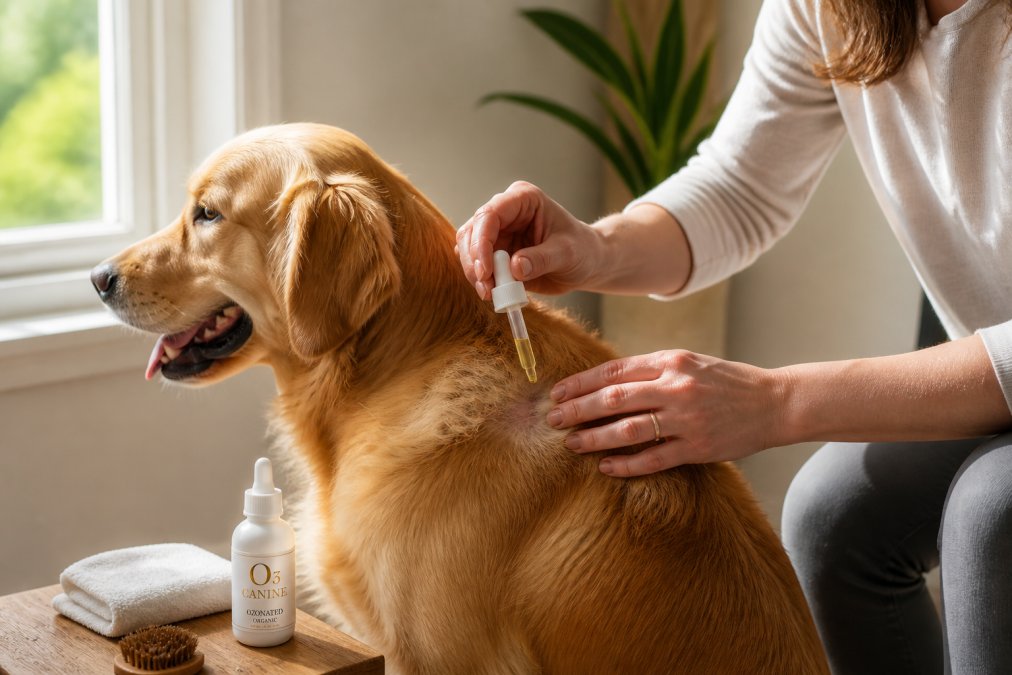
Frequency for topical use typically ranges from once to three times daily, depending on severity. Consistency is critical, as skipping applications slows healing. One practical challenge is preventing your dog from licking the treated area immediately after application. If your dog obsessively licks the spot, consider applying the oil at night or using a soft cone collar for 15-20 minutes post-application.
Monitor the area closely. Improvement typically shows as reduced redness, decreased swelling, and a visible reduction in the dog's licking behavior. If the area worsens or shows signs of infection after 5-7 days of consistent application, consult your veterinarian.
Adding to Food for Internal Benefits
Oral administration is simpler logistically and better for systemic benefits. Add the recommended dose directly to your dog's regular food, mixing thoroughly so the oil is evenly distributed throughout the meal. This approach works best with wet food, which naturally incorporates oils well.
For dogs resistant to oily food, try mixing the oil with high-value additions like bone broth, plain cooked chicken, or a small amount of plain peanut butter. o3 Canine's formulation is designed to be palatable on its own, but individual dogs vary in their acceptance of supplements.
Start with the lower recommended dose for your dog's weight and observe for digestive tolerance over 3-5 days. If your dog tolerates it well, you can maintain that dose or gradually increase to the upper recommended range. Absorption improves when ozonated oil is consumed with food containing fat, as oil-soluble compounds are better absorbed in the presence of dietary fat.
Choosing the Right Ozonated Oil: What Matters Most
Not all ozonated oils are created equal. The carrier oil base, ozonation process, storage conditions, and manufacturing standards all influence efficacy and safety.
Carrier Oil Comparison: Olive vs. Coconut vs. Jojoba
Olive oil as a carrier offers high antioxidant content even before ozonation, with polyphenols and vitamin E that complement ozone's effects. It's well-tolerated by most dogs and has a long history of safe use. The downside: olive oil has a distinct flavor that some dogs reject and is more prone to rancidity once ozonated.
Coconut oil carriers provide medium-chain triglycerides, which are metabolized differently than longer-chain fats and may offer faster energy availability. Coconut oil has natural antimicrobicidal properties that synergize with ozone's effects, and many dogs find it more palatable than olive oil. The limitation: it's higher in saturated fat, which some dogs with pancreatitis or obesity issues should avoid.
Jojoba oil is technically a wax ester, making it structurally unique. It closely mimics the skin's natural sebum, making it ideal for topical skin applications. Jojoba absorbs quickly without leaving a greasy residue and is less prone to rancidity. The drawback: it's more expensive and less commonly used in canine supplements.
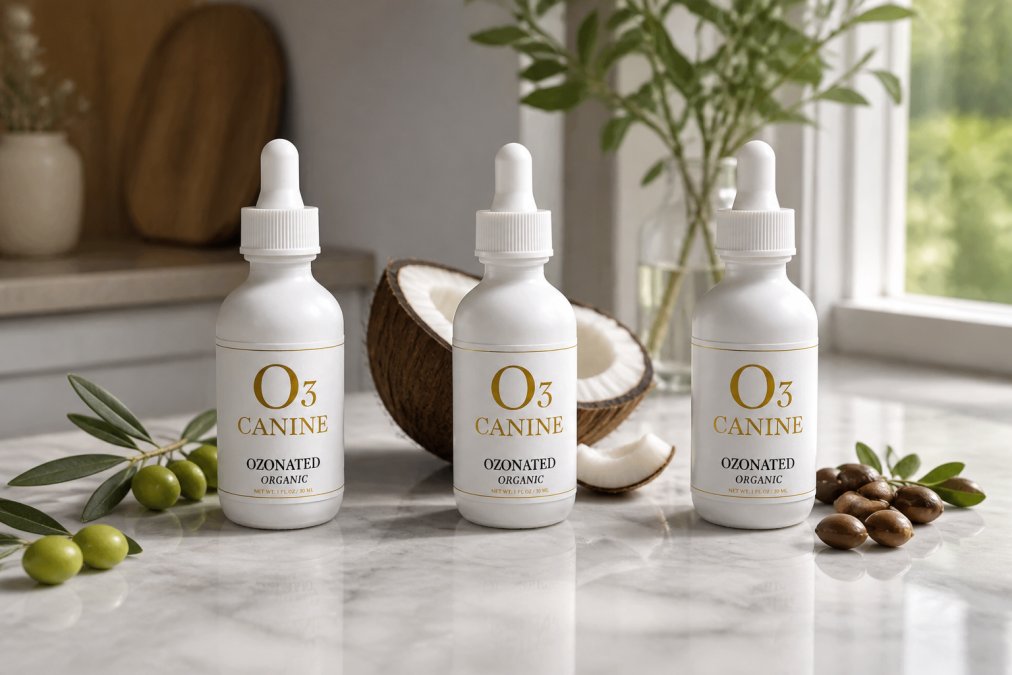
For skin conditions, jojoba or coconut oil carriers are typically superior because they absorb well. For internal immune support, olive oil's antioxidant profile makes it the stronger choice. If your dog has a history of pancreatitis or digestive sensitivity, olive oil is the safest option.
Storage and Shelf-Life Stability
Ozonated oils are more oxidized than regular oils, making them more therapeutically active but also more prone to degradation. Store ozonated oil in a cool, dark place, ideally a refrigerator or cool pantry away from direct sunlight. Glass bottles with airtight seals are essential; plastic containers allow oxidation and degradation over time.
Shelf life for ozonated oils typically ranges from 6-12 months when properly stored, though this varies by carrier oil and ozonation process. Check the manufacturing date and use-by date on the label. Signs of degradation include off-odors, darkening of the oil, or a rancid smell. If the oil smells off, it's lost potency and should be replaced.
Temperature stability matters significantly. Ozonated oils stored above 70°F degrade faster than those kept below 60°F. If you live in a warm climate, refrigeration is strongly recommended.
Contraindications and Drug Interactions
Ozonated oil is contraindicated in dogs with certain conditions or those taking specific medications.
Bleeding disorders are a primary contraindication. Ozone's oxidative properties may theoretically affect blood clotting, making it inadvisable for dogs with hemophilia, thrombocytopenia, or those taking anticoagulant medications like warfarin.
Severe respiratory disease is another consideration. Dogs with severe asthma, chronic obstructive pulmonary disease, or active respiratory infections should avoid ozonated oil until the condition resolves.
Acute infections require caution. If your dog has an active bacterial or fungal infection, ozonated oil's immuno-stimulant properties could theoretically exacerbate the immune response before antibiotics or antifungals take effect.
Immunosuppressive medications may interact with ozonated oil's immune-stimulating effects. Dogs on corticosteroids, cyclosporine, or other immunosuppressants should use ozonated oil only under veterinary supervision.
Pancreatitis is a relative contraindication, particularly with coconut oil carriers. If your dog has a history of pancreatitis, choose an olive oil or jojoba carrier and use sparingly, or avoid ozonated oil entirely.
Pregnancy and nursing lack sufficient safety data. Until more research clarifies ozonated oil's effects on developing puppies or nursing dams, it's prudent to avoid use during these periods.
Always disclose ozonated oil use to your veterinarian, especially if your dog is on medications or has chronic health conditions.
Choosing an ozonated oil for your dog requires balancing multiple factors: the carrier oil base, storage stability, your dog's specific health condition, and any existing medications or contraindications. o3 Canine's K9 Oil is formulated with palatability and ease of administration as core design principles. For dogs struggling with chronic skin irritation, immune challenges, or coat quality issues, ozonated oil offers a natural approach worth exploring. Start conservatively, monitor closely, and give the supplement 4-6 weeks of consistent daily use before assessing results. Combined with proper storage and attention to contraindications, ozonated oil can be a meaningful addition to your dog's wellness routine. You can purchase K9 Oil for $26.00 at o3canine.com.
Frequently Asked Questions
How long does it take to see results from ozonated oil for dogs?
Most dog owners report visible improvements in coat quality and reduced skin irritation within 2-4 weeks of consistent use. However, results vary based on your dog's individual condition, the severity of skin issues, and dosage consistency. For chronic inflammatory conditions, allowing 6-8 weeks of regular supplementation provides a more accurate assessment of effectiveness. Patience and consistent application are key to observing the full benefits of ozone therapy for dogs.
What are the potential side effects of ozonated oil in pets?
Ozonated oil is generally well-tolerated when used as directed. Some dogs may experience mild digestive adjustment during the first week, including loose stools or temporary appetite changes. Topical application rarely causes reactions, though dogs with known sensitivities to specific carrier oils should be tested first. Overdosing or using low-quality products increases the risk of oxidative stress rather than antioxidant benefits. Always introduce ozonated oil gradually and consult your veterinarian if your dog shows unusual symptoms.
Is ozonated oil safe for dogs with sensitive stomachs?
Yes, ozonated oil can be beneficial for dogs with digestive sensitivities when introduced properly. Start with a very small dose and gradually increase over 7-10 days to allow your dog's gut to adjust. The anti-inflammatory properties may actually support gut healing and reduce digestive inflammation. However, if your dog has severe gastrointestinal disease or is on specific medications, consult your veterinarian before adding any supplement. Dogs with food allergies should verify the carrier oil matches their dietary restrictions.
Can I use ozonated oil alongside my dog's current medications?
Ozonated oil generally does not interact with standard medications, but discussing it with your veterinarian is essential, especially if your dog takes anticoagulants or immune-suppressing drugs. The immuno-stimulant properties of ozone therapy may theoretically affect certain medications. Your vet can advise on timing and dosage to ensure safe co-administration. Never stop or adjust prescribed medications without veterinary guidance, even when adding natural supplements like ozonated oil.
What makes ozonated oil different from regular fish oil or other pet supplements?
Ozonated oil works through activated oxygen and lipid peroxidation, creating unique antimicrobial and anti-inflammatory effects that standard supplements don't provide. Unlike fish oil, which relies on omega fatty acids alone, ozonated oil supports tissue regeneration, accelerates wound healing, and stimulates immune response through oxidative stress management. The therapeutic grade ozonation process infuses oxygen molecules into carrier oils, creating a multifunctional supplement that addresses skin, gut, and systemic health simultaneously.
This article was written using GrandRanker
