

Table of Contents
- Understanding Dog Paw Licking Causes
- How to Soothe Dog Itchy Skin Naturally
- Dog Gut Health and Skin Irritation Connection
- Step-by-Step Diagnostic Checklist
- Safety Warnings for DIY Ingredients
- When to See a Veterinarian
- Behavioral Redirection and Prevention
- Conclusion
Last Updated: August 30, 2026
Understanding Dog Paw Licking Causes
Dog excessive licking is a common complaint that signals physical discomfort, an underlying health issue, or emotional distress. The itch-scratch cycle creates a vicious problem: licking irritates skin further, triggering more itching and more licking. Breaking this cycle requires identifying whether the issue stems from allergies, behavioral anxiety, or a combination of both.
Allergies and Environmental Triggers
Allergies are the leading cause of dog excessive licking. Environmental allergens like pollen, grass, dust mites, and mold trigger inflammatory responses in sensitive dogs, concentrating in the skin and creating localized itching.
Atopic dermatitis is the medical term for allergic skin inflammation. Unlike food allergies affecting the digestive system, environmental allergies manifest directly on the skin. A dog with atopic dermatitis will lick specific areas repeatedly: paws, ears, face, and belly. The itching intensifies during certain seasons when pollen counts spike, which is why you might notice your dog licking more during spring or fall. Management focuses on reducing exposure and supporting the skin barrier to resist irritation.
Behavioral and Anxiety-Related Licking
Psychological stress, anxiety, and boredom trigger licking in many dogs, especially in high-strung breeds or dogs with separation anxiety. Behavioral licking differs from allergic licking in pattern: anxious dogs often lick the same spot repeatedly, sometimes until they create hot spots or secondary infections. Environmental enrichment, consistent exercise, and calming supplements can reduce anxiety-driven licking.
Breed-Specific Predispositions
Certain breeds are genetically predisposed to skin sensitivity and excessive licking (peer-reviewed research). Labrador Retrievers, Golden Retrievers, Bulldogs, and West Highland White Terriers frequently struggle with atopic dermatitis and food sensitivities. Their skin barrier is naturally more permeable, allowing allergens and irritants to penetrate more easily.
How to Soothe Dog Itchy Skin Naturally
Natural remedies work by calming inflammation, supporting the skin barrier, and reducing the itch-scratch cycle. These approaches are gentle enough for daily use and can be combined with other treatments your veterinarian recommends.
Apple Cider Vinegar Soaks
Apple cider vinegar has natural antimicrobial and anti-inflammatory properties that soothe irritated paw pads and reduce bacterial overgrowth. Dilute apple cider vinegar with lukewarm water in a 1:1 ratio. Soak your dog's paws for 5-10 minutes, 2-3 times per week. Never use on broken skin or open wounds, as the acidity can cause stinging. Always rinse thoroughly with fresh water afterward.
Baking Soda Paste Treatment
Baking soda is a mild alkaline compound that neutralizes acids and reduces inflammation. Mix baking soda with just enough water to form a thick paste. Apply directly to affected areas and leave on for 10-15 minutes before rinsing with lukewarm water. This treatment can be used 2-3 times weekly. Never apply to open wounds or areas where skin is broken.
Topical Balms and Moisturizing Solutions
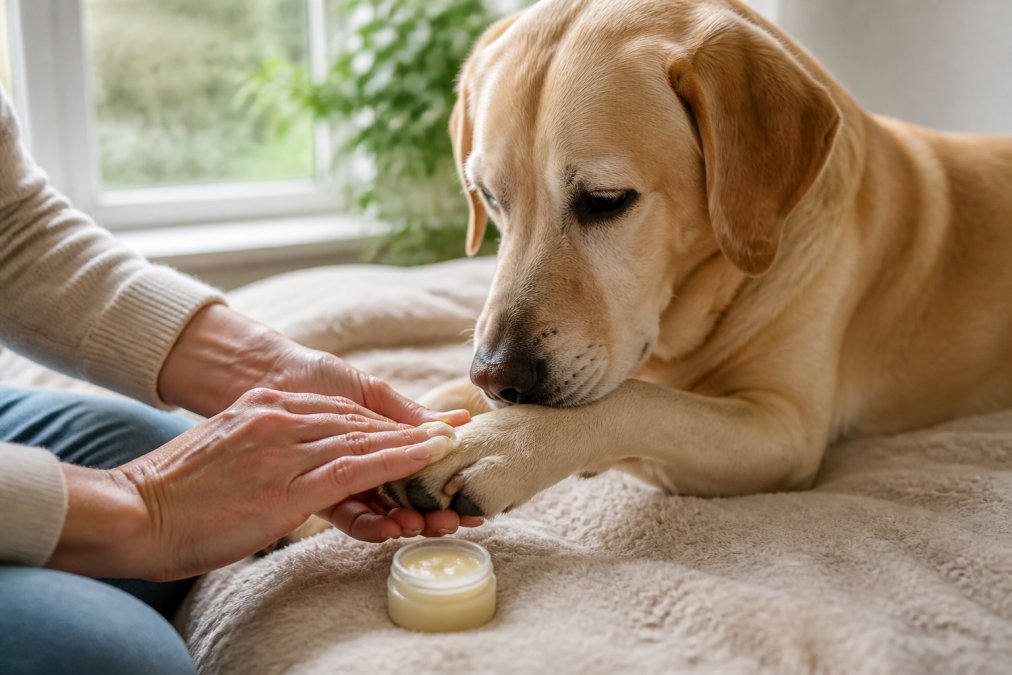
Natural balms containing shea butter, coconut oil, and calendula provide moisture and create a protective barrier over irritated skin. Apply balms to affected areas 1-2 times daily, focusing on paws, ears, and visible hot spots. Choose balms specifically formulated for dogs, as human products may contain ingredients that are problematic if ingested during grooming.
Dog Gut Health and Skin Irritation Connection
The relationship between gut health and skin condition is profound. A dog's digestive system and immune system are deeply interconnected through the intestinal barrier and the microbiome, the community of beneficial bacteria living in the gut. When the gut microbiome is imbalanced or the intestinal barrier is compromised, inflammatory responses increase throughout the body, including in the skin. A healthy gut with balanced bacteria and a strong intestinal barrier supports immune tolerance and reduces skin inflammation.

Elimination Diets for Food Sensitivities
Food sensitivities differ from true food allergies but produce similar symptoms: itching, skin irritation, and excessive licking. Common culprits include chicken, beef, dairy, wheat, and corn.
An elimination diet removes potential trigger ingredients for 8-12 weeks while monitoring your dog's skin and licking behavior (aaha.org). Start with a limited-ingredient diet containing a novel protein your dog hasn't eaten before and a single carbohydrate source. If itching improves significantly, you've likely identified a food sensitivity. After the elimination phase, reintroduce one ingredient at a time over 1-2 weeks. Many owners find that removing grain-based fillers and switching to high-quality, limited-ingredient diets dramatically reduces their dog's licking within 4-6 weeks.
Supplements for Immune Support
Omega-3 fatty acids, probiotics, and targeted antioxidants support gut health and reduce systemic inflammation that manifests in the skin. Omega-3s reduce inflammatory cytokines and support skin barrier function (peer-reviewed research). Probiotics restore beneficial bacteria populations, strengthening the intestinal barrier and improving immune regulation. Look for multi-strain probiotics with at least 5-10 billion CFU per serving, formulated specifically for dogs.
Products like o3 Canine K9 Oil support gut health and immune function through ozonated organic camelina oil and herbal extracts, reducing inflammation from the inside out. Many owners notice their dogs lick less within 3-4 weeks of consistent supplementation because the internal inflammation driving the behavior has decreased.

Step-by-Step Diagnostic Checklist
Before investing time and money in treatments, identify what's actually causing your dog's excessive licking.
Week 1: Observe and Document
- Note when licking occurs: specific times of day, after meals, during stress, or constantly
- Identify which areas your dog licks most: paws, ears, face, belly, or specific spots
- Track seasonal patterns: does licking intensify in spring or fall
- Note any other symptoms: redness, hair loss, odor, discharge, or scabs
Week 2-3: Environmental Assessment
- Review your dog's diet for 3-4 weeks: record exact brands and ingredients
- Assess stress levels: recent changes, separation time, activity level, household tension
- Evaluate living environment: new carpet, cleaning products, lawn treatments, or pollen exposure
- Check for parasites: look for fleas, mites, or lice
Week 4: Pattern Analysis
- Compare your observations to identify the most likely cause
- If licking worsens during certain seasons, allergies are likely
- If licking increases during stressful periods, anxiety may be a factor
- If licking started after a diet change, food sensitivity is possible
- If licking is constant regardless of circumstances, a medical condition may be present
When to escalate: If your dog's licking has created open wounds, secondary infections, or significant hair loss, or if the checklist doesn't point to an obvious cause, schedule a veterinary appointment.
Safety Warnings for DIY Ingredients
Natural doesn't automatically mean safe. Several common home remedies can harm dogs if used improperly.
Apple cider vinegar can irritate or burn open skin and severely inflamed areas. Never apply undiluted vinegar directly to skin, and always use the 1:1 dilution ratio with lukewarm water.
Baking soda is generally safe topically but shouldn't be ingested in large amounts. Never use on open wounds.
Essential oils are often toxic or irritating to dogs. Tea tree oil, eucalyptus, peppermint, and citrus oils can cause chemical burns or systemic toxicity. Verify any essential oil product is formulated specifically for canine use.
Coconut oil is safe for most dogs but can cause digestive upset in large quantities. Some dogs develop contact dermatitis. Start with small amounts and monitor for increased itching or digestive issues.
Honey is safe in small amounts and has antimicrobial properties, but excessive amounts provide too much sugar.
Start with one natural remedy at a time, use it consistently for 2-3 weeks, and monitor your dog's response. If you see improvement, continue. If you see no change or worsening, discontinue and try a different approach.
When to See a Veterinarian
Natural remedies are valuable for managing mild to moderate itching, but they're not appropriate for every situation.
Schedule a veterinary appointment if:
Your dog has created open sores, scabs, or bleeding areas through excessive licking. These wounds risk secondary bacterial or yeast infections requiring professional treatment.
The itching has persisted for more than 4-6 weeks despite your best efforts with natural remedies and dietary changes. Chronic itching often requires diagnostic testing to identify the specific cause.
Your dog shows signs of infection: pus, foul odor, swelling, or discharge from affected areas. Bacterial or yeast overgrowth requires antimicrobial treatment beyond what natural remedies can provide.
The licking is accompanied by other symptoms: vomiting, diarrhea, lethargy, loss of appetite, or behavioral changes. These signs suggest a systemic issue rather than localized skin irritation.
Your dog is scratching so intensely that they're causing injury faster than you can treat it. This indicates severe itching requiring immediate professional management.
A veterinarian can perform diagnostic tests, skin scrapings, fungal cultures, or allergy testing to identify whether the issue is parasitic, fungal, bacterial, allergic, or behavioral.
Behavioral Redirection and Prevention
Reducing the behavior itself is as important as treating the underlying cause. Even if you eliminate the physical itch, a dog that's developed obsessive licking habits may continue the behavior out of habit or anxiety.
Interrupt the cycle consistently. When you catch your dog licking excessively, redirect their attention to an appropriate activity: a puzzle toy, a chew, or a walk. Over time, your dog learns that licking triggers redirection rather than allowing them to continue.
Increase physical activity and mental stimulation. Dogs with adequate exercise and enrichment show fewer behavioral licking episodes. A 30-minute walk, 15 minutes of play, or a puzzle toy requiring problem-solving reduces anxiety and boredom-driven licking.
Manage stress and anxiety proactively. If your dog licks more during certain situations, address the underlying anxiety. Calming supplements, consistent routines, and anxiety-reducing strategies help.
Create a consistent routine. Dogs thrive with predictability. Feeding, walking, and sleep schedules reduce overall anxiety and the licking that accompanies it.
Monitor progress carefully. Track when and where your dog licks over 2-3 weeks. You should see gradual improvement in frequency, duration, or intensity. If you see no change after 3-4 weeks, veterinary evaluation becomes more important.
| Remedy | Best For | Duration | Frequency |
|---|---|---|---|
| Apple Cider Vinegar Soaks | Paw irritation, mild inflammation | 5-10 minutes | 2-3 times weekly |
| Baking Soda Paste | Localized hot spots, acute irritation | 10-15 minutes | 2-3 times weekly |
| Topical Balms | Dry skin, moisture barrier support | As needed | 1-2 times daily |
| Elimination Diet | Food sensitivities | 8-12 weeks | Ongoing |
| Omega-3 Supplements | Systemic inflammation reduction | Ongoing | Daily |
| Probiotics | Gut health and immune support | Ongoing | Daily |
| Behavioral Redirection | Obsessive licking habits | Immediate | Every occurrence |
Conclusion
Dog excessive licking is rarely a single problem with a single solution. Most cases involve a combination of physical irritation, immune system imbalance, and behavioral patterns. The most effective approach addresses all three: treating the immediate skin irritation with natural remedies, supporting gut health through diet and supplements, and interrupting the behavioral habit through consistent redirection and environmental enrichment.
Start with the diagnostic checklist to understand what's driving your dog's licking. Then layer in treatments: topical soothing for immediate relief, dietary changes for long-term immune support, and behavioral management to break the habit.
For dogs struggling with chronic itching and excessive licking, o3 Canine K9 Oil provides comprehensive internal support. The ozonated oil works to calm skin irritation by promoting gut health and immune balance, addressing the root cause of inflammation rather than just treating symptoms. Most owners notice meaningful improvement within 3-4 weeks of consistent use, with their dogs licking less frequently and showing visible improvement in coat quality and skin condition.
Frequently Asked Questions
What causes dog excessive licking of paws and skin?
Dog excessive licking stems from allergies, parasites, yeast infections, bacterial overgrowth, anxiety, or boredom. Environmental allergens like pollen and grass trigger pododermatitis and atopic dermatitis. Food sensitivities also cause paw pad irritation. Behavioral factors, stress, anxiety, or obsessive behavior, drive chronic licking. A diagnostic checklist helps identify the root cause before treating.
How does dog gut health affect skin irritation and licking?
The skin barrier depends on intestinal health. Poor gut balance allows inflammation and secondary infections, increasing the itch-scratch cycle. Food sensitivities trigger both digestive upset and skin irritation. An elimination diet identifies problem foods. Supporting dog gut health with natural supplements strengthens immune defenses and reduces paw licking caused by internal imbalance rather than external triggers alone.
Are apple cider vinegar soaks safe for dogs with broken skin?
No. Apple cider vinegar soaks work only on unbroken skin. The acidic solution irritates open wounds or hot spots. If your dog has raw, bleeding, or infected areas, skip vinegar and see a veterinarian. For intact skin, dilute one part apple cider vinegar to three parts lukewarm water. Soak paws for 5-10 minutes. Stop if your dog shows discomfort or increased redness.
How long does it take to see results from natural remedies?
Topical treatments like balms and soaks show relief in days to weeks. Dietary changes and gut-supporting supplements take 4-8 weeks to reduce inflammation and licking behavior. Behavioral redirection works gradually as anxiety triggers decrease. Results vary by cause, allergies need ongoing management, while anxiety-driven licking improves as stress reduces. Consistency matters more than speed.
This article was written using GrandRanker
